Information
Straight answers on buying, selling, letting and renting in Worthing
This is the guide we'd talk you through if you called into the office on the Strand. It has four parts, one for each reason people come to us, and each sets out what happens, in what order, and what you'll need to have ready. After those come longer notes on the parts of Worthing, and at the end, how to reach us with anything the guide doesn't cover. Start with the part that describes you.
Also on this page: Around Worthing Still not sure? Ask us
This guide is general information about how things usually work in England, written plainly. It isn't legal or financial advice; for your own circumstances, speak to a solicitor, conveyancer or qualified financial adviser.
Part 2 of 4 · Sellers
If you're selling
Most sellers start by asking how much their house is worth in Worthing. Here's how we answer that, and what happens from then until you hand over the keys.
In short
Book a valuation, arrange your Energy Performance Certificate, check your details before they go live, and decide on every offer yourself. We pass them all to you in writing.
-
1Start with a valuation
We come to your home and go round it with you, room by room. Then we talk through what similar homes nearby have sold for, what's on the market in your part of town now, and what buyers there tend to look for.
You'll get a suggested asking price and an explanation of how we arrived at it. It's the starting point for a conversation; the asking price is your decision.
-
2Get your paperwork together
Your home needs a valid Energy Performance Certificate before it's marketed. If there isn't a current one, we can explain how to arrange it. It also helps to gather guarantees and warranties, planning or building regulations paperwork for any work you've had done, and, for a leasehold flat, the lease and your latest service charge details.
Choose a solicitor or conveyancer early. Having one ready saves time once you've accepted an offer.

-
3Preparing and marketing your home
We prepare photographs, a description and the key details, and you check all of it before anything is published. Your home then appears on our Properties for Sale page, with a board outside if you want one.
A little tidying goes a long way in photographs: clear worktops, open curtains and a cut lawn.
-
4Viewings
We arrange viewings at times that suit you and let you know who's coming. Afterwards we pass on what viewers said, including the less flattering comments, because that's what helps you decide what to do next.
-
5Offers
Every offer comes to you in writing, with what we know about the buyer's position: whether they have a mortgage agreed in principle, a home to sell or cash. The highest figure isn't always the strongest offer, and we'll explain why when it matters. The decision is yours.
-
6From sale agreed to completion
Once you accept, we send the details of the sale to both solicitors and keep in touch with them, and with anyone else in the chain, as the legal work goes on. You'll hear from us as things move, not only when you chase.
At exchange of contracts the sale becomes binding and a completion date is fixed. On the day, the money arrives with your solicitor and the keys go to your buyer.
Thinking of selling? Talk to us about a valuation
Part 3 of 4 · Landlords
If you're a landlord
A letting agent can take a lot of the work off your hands, but some responsibilities stay with you as the landlord, whoever looks after the property. This is how letting through Groyne & Gable works.
In short
Have your safety certificates in order, tell us how involved you want to be once a tenant moves in, and we'll find and reference the tenant.
-
1A rental appraisal
We look round the property with you and talk through what comparable homes nearby are letting for, and what tenants in that part of Worthing tend to ask for. You'll get a suggested rent and a straight view of anything that would help it let.
-
2What to have ready before an appraisal
You don't need all of these on the day, but you'll need them before a tenant moves in:
- A valid Energy Performance Certificate. In England, most rented homes must be rated E or above.
- A current Gas Safety Record from a Gas Safe registered engineer, if the property has gas appliances. It's renewed every year.
- An Electrical Installation Condition Report, renewed at least every five years.
- Smoke alarms on every storey, and a carbon monoxide alarm in any room with a fixed combustion appliance such as a boiler.
- Your mortgage lender's consent to let, suitable landlord insurance and, for a leasehold flat, any permission your lease requires.
- Keys for every door and window, and instructions for the boiler and appliances.
-
3Finding a tenant
We prepare photographs and details for you to approve, list the property on our Properties to Let page and arrange viewings. Where there's interest, we'll tell you about each applicant before anything is agreed.
-
4Referencing and checks
Applicants are referenced for income and affordability, with a previous landlord reference and a credit check. In England, landlords must also check that every adult tenant has the right to rent in the UK before the tenancy starts.
-
5The deposit and the tenancy agreement
A tenant's deposit must be protected in a government-approved scheme within 30 days, and the tenant must be given the scheme's prescribed information. Before they move in, tenants should also receive the government's How to Rent guide, the EPC and the gas safety record.
Tenancy law in England has been changing, so we'll explain the rules that apply to your tenancy at the time you let it, rather than relying on how things used to work.
-
6Once the tenancy begins
Some landlords want us to find a tenant and hand over from there; others would rather we were the tenant's first point of contact. Tell us which suits you and we'll set out exactly what that includes, so you and your tenant both know who to call.
Looking for landlord services in Worthing? How we work with tenants and landlords
Part 4 of 4 · Tenants
If you're renting
Renting a home, especially for the first time, involves more paperwork than most people expect. Here's the order it usually happens in, so nothing takes you by surprise.
In short
View, apply, get referenced, read your agreement, move in, and know from day one who to call if something goes wrong.
-
1Viewing
Ring the office to view anything on our Properties to Let page. Ask about what's included: bills, furniture, parking, and whether pets would be considered. While you're there, check the phone signal, run a tap, and look for damp around windows and in cupboards.
-
2Applying
If you'd like to go ahead, tell us and we'll explain how to apply. You may be asked for a holding deposit to take the home off the market while checks are done. It's capped at one week's rent, and we'll tell you in writing when it would and wouldn't be returned.
-
3Referencing
Referencing usually covers your income, a reference from a previous landlord and a credit check. You'll also be asked for identity documents showing you have the right to rent in the UK. If your income doesn't meet the usual level, a guarantor may be an option; ask us early.
-
4Signing and moving in
Read your tenancy agreement properly before you sign, and ask about anything that isn't clear. For most tenancies, the deposit is capped at five weeks' rent and must be protected in a government-approved scheme; you'll be told which one.
Before you move in you should receive the How to Rent guide, the Energy Performance Certificate and the gas safety record. Check the inventory carefully on the day, and take your own dated photographs too.
-
5During your tenancy
At the start we'll tell you who looks after your home: us, or your landlord directly. Report repairs promptly, and in writing, so there's a record. If you're unsure who to call, ring the office on 01632 960 418 and we'll point you the right way.
Found somewhere you like? Enquire about a home to let
Moving to Worthing
Around Worthing: which part of town suits you
Longer notes on the parts of Worthing people ask us about most. Treat them as a starting point: once you've read them, walk the streets at different times of day, and ask us about any particular road.
-
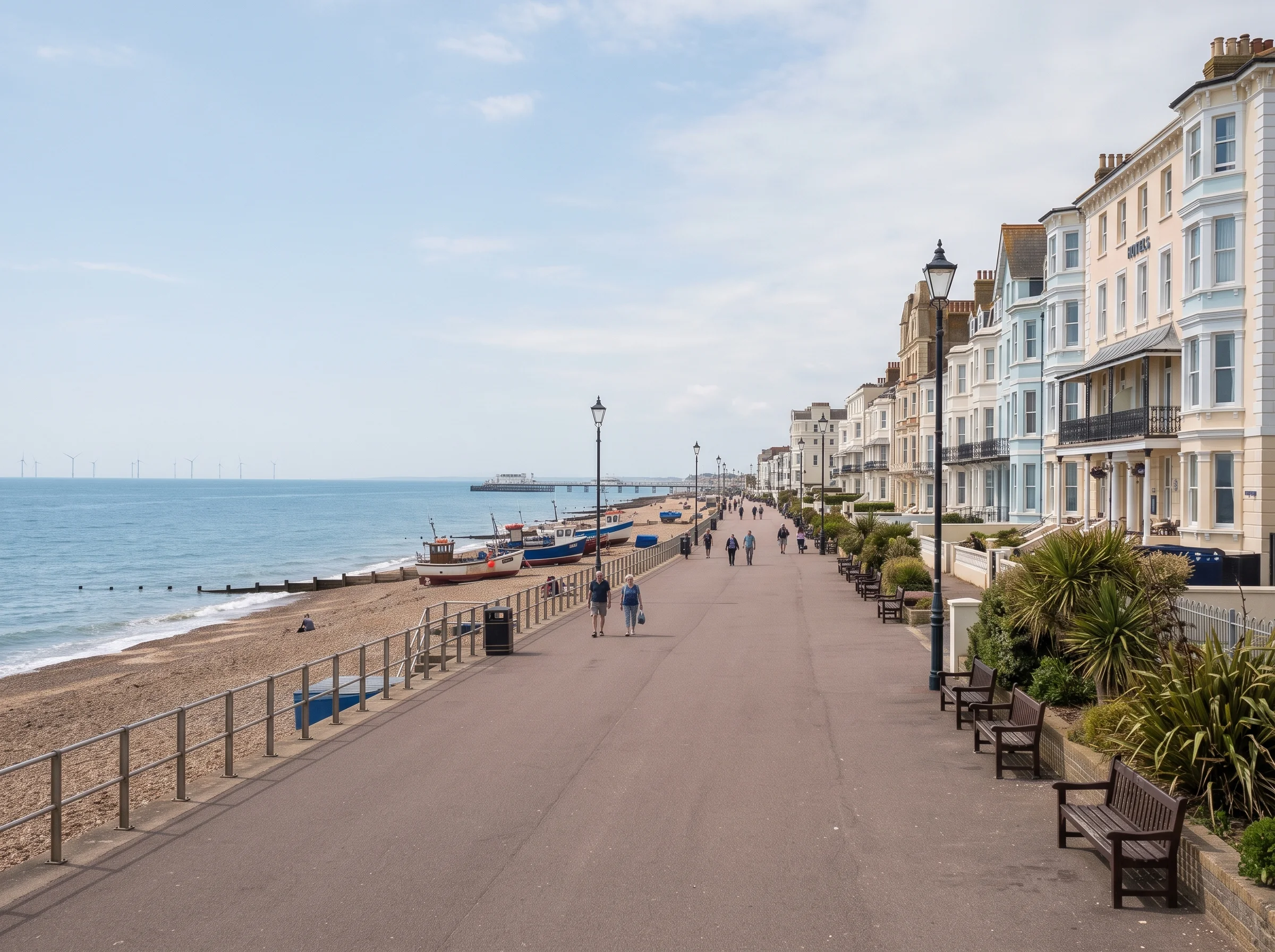
Town centre & seafrontA local scene on the promenade The town centre and the seafront
Along the front and in the streets behind it you'll find flats in converted period houses, flats above shops, and newer blocks facing the sea. The pier, the shops around Montague Street and Worthing station are all within walking distance.
It's the part of town for people who'd rather walk than drive, and for commuters who want the station close by.
- Tends to suit
- First-time buyers, renters working in town, and downsizers who want everything on foot.
- Worth asking about
- Parking, the service charge and lease length on flats, and how busy the street is in the evening.
-
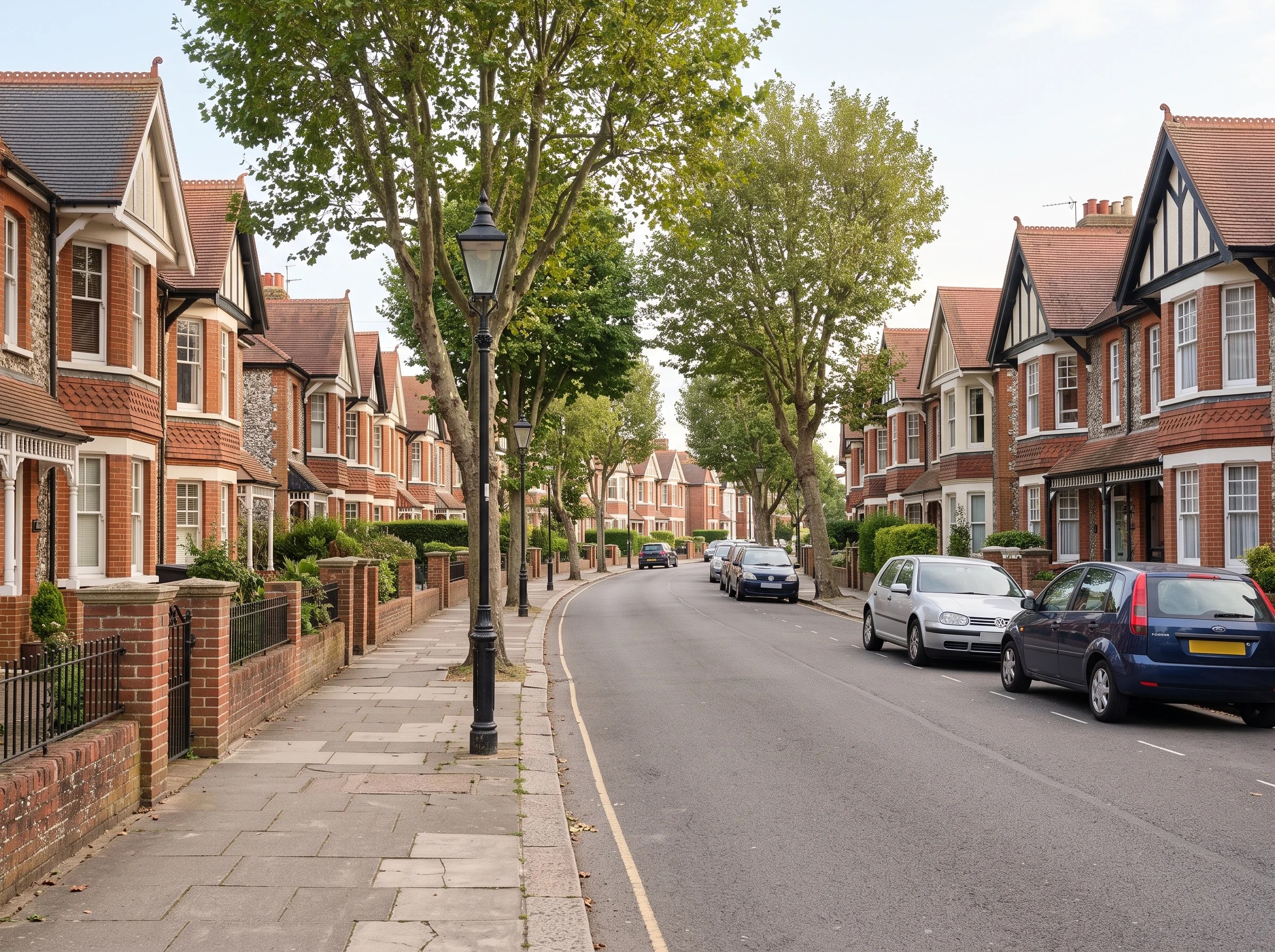
Heene & West WorthingA local scene on a residential road Heene and West Worthing
West of the town centre, the streets are mostly Victorian and Edwardian, with larger houses alongside many that have been divided into flats. You're a few minutes from the sea, close enough to walk into town, and near West Worthing station.
It gives you period character without being in the middle of things.
- Tends to suit
- Couples and families who want an older house, and renters looking for a flat with more space than a new build.
- Worth asking about
- Whether a converted flat comes with a share of the freehold, and the condition of original windows and roofs.
-

Broadwater & TarringA local scene on a shopping street Broadwater and Tarring
North of the railway line, Broadwater is mostly terraced and semi-detached houses on residential roads around Broadwater Green. Next door, West Tarring has an old high street with small shops and brick-and-flint cottages.
Both have the feel of neighbourhoods in their own right, with local shops close by.
- Tends to suit
- Families who want a garden, and first-time buyers hoping for a house rather than a flat.
- Worth asking about
- Parking on terraced streets, and school admissions if you have children (see the note below).
-
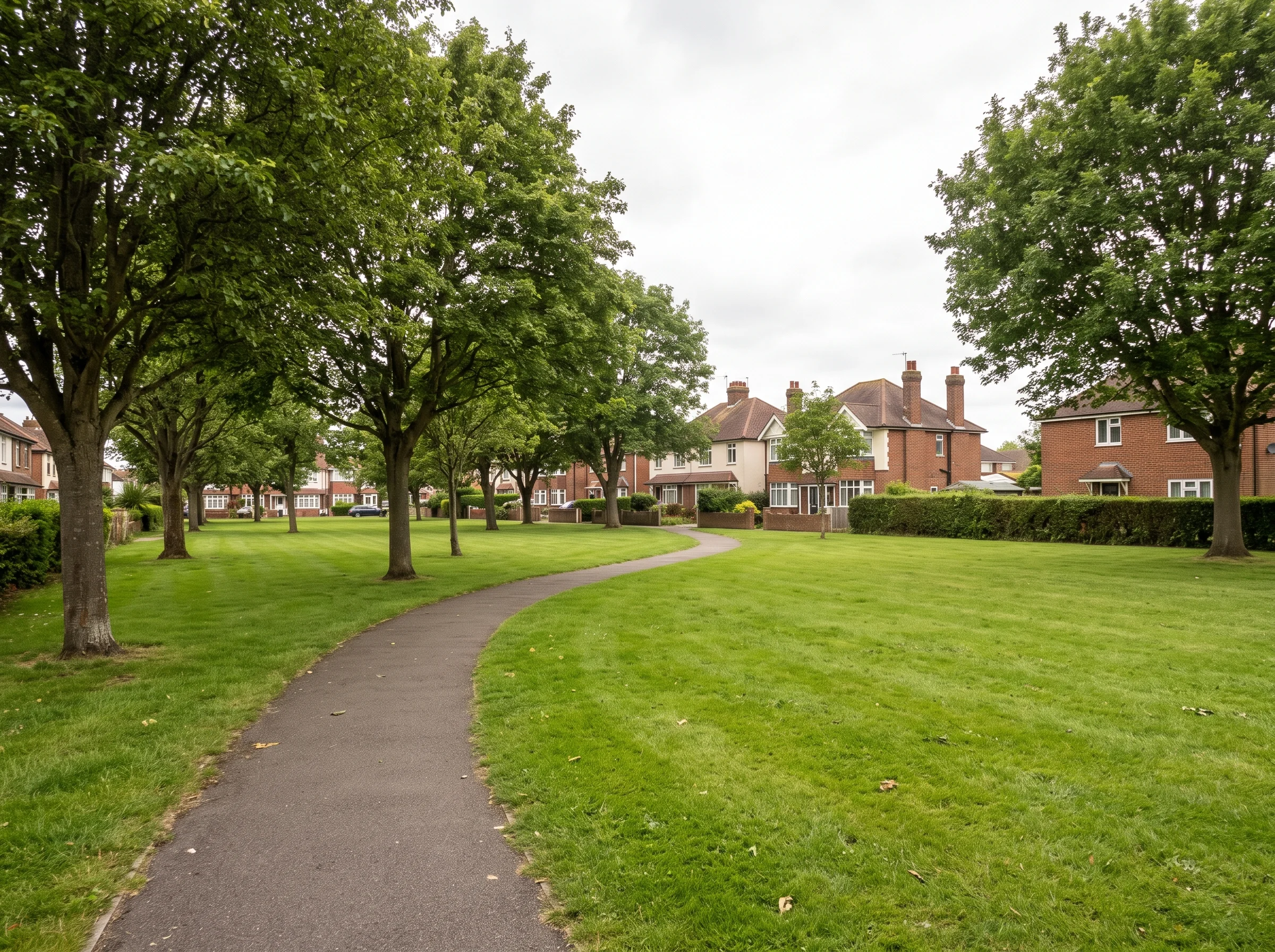
Goring-by-Sea & DurringtonA local scene on an open green Goring-by-Sea and Durrington
At the western end of town the roads are generally wider and quieter, with bungalows, detached and semi-detached houses. Goring runs down to the Greensward beside the sea, and both areas have their own railway stations, at Goring-by-Sea and Durrington-on-Sea.
Life moves at a calmer pace here than in the town centre, with more space around each home.
- Tends to suit
- Downsizers looking for single-storey living, and families wanting more room inside and out.
- Worth asking about
- Bus and train routes if you won't be driving, and how much upkeep a larger garden will need.
A note on schools. We don't publish school ratings or catchment claims. School admissions in Worthing are coordinated by West Sussex County Council, so check the current arrangements with them before you commit to a road. If you'd like to talk about a particular street, get in touch with the office
Still not sure? Ask us
If your situation doesn't quite fit any of the four parts above, or you'd simply rather talk it through, call in at the office or ring. You don't need to have decided anything first.
The officeThe Strand, Worthing
Open9am–6pm Monday to Friday and 9am–1pm Saturday
Ring01632 960 418